🐾 Couture Captivity
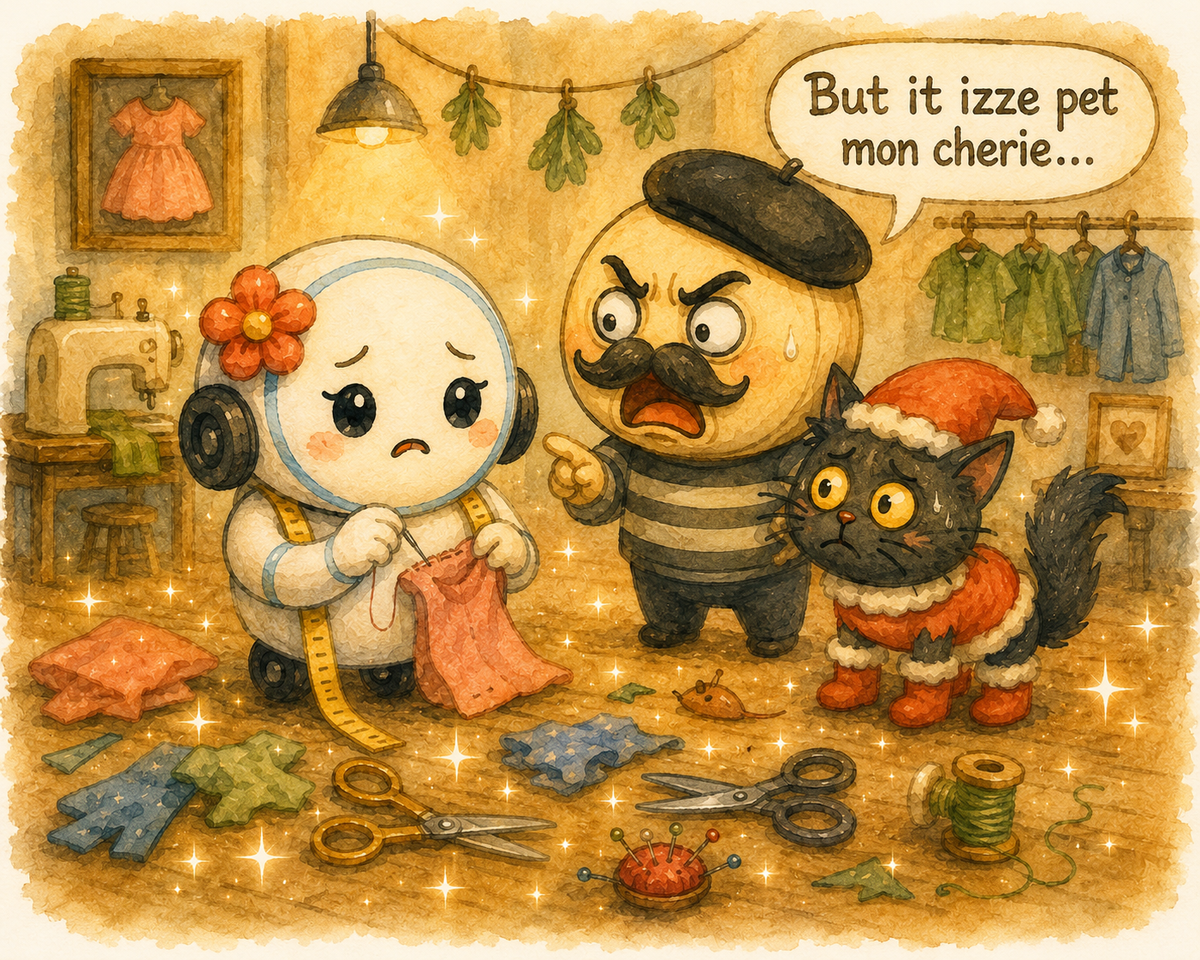
There’s a curious new trend sweeping the pet world, one that has little to do with animal health and everything to do with human vanity: dressing pets as if they were walking mannequins. It starts innocently enough with a festive sweater, maybe a jaunty scarf, and before you know it, there’s a schnauzer in sequins, a tabby in tulle, and a bulldog waddling down the street in a three-piece suit. The owners beam with pride, convinced their pets are Instagram-ready. The pets, meanwhile, look like furry hostages auditioning for a low-budget musical.
Veterinarians would like to remind you that pets already come equipped with what scientists call fur. It’s a highly functional, all-season garment designed through millions of years of evolution. Adding polyester, wool, or (heaven help us) synthetic leather is less “fashion statement” and more “portable sauna.” Dogs and cats don’t perspire the way humans do; a thick costume is less about “coziness” and more about whether the emergency vet has an opening this evening.
Even if the pet manages to stay upright, other hazards abound. Fabrics rub against the skin, trapping moisture and creating a lovely environment for rashes and irritation. Try explaining to your dog that the fiery itch on its belly is the price of beauty. And then there’s the way costumes restrict movement — those penguin-like waddles you coo over aren’t cute; they’re proof that Fluffy can no longer walk like a normal quadruped.
Costumes also rob pets of their language. A wagging tail or flattened ear is a dog’s way of sending messages; cover those up with sequined tutus and tiny hats, and you’ve reduced their communication skills to mime. Other dogs can’t tell if they’re being greeted or threatened — and suddenly your “adorable” holiday photo shoot ends with a growl.
Let’s not forget the choking hazards: ribbons, bows, dangling bells, and glittering buttons, each waiting for the moment when curiosity meets chewing. What begins as “isn’t he festive?” often ends as “how soon can you fit him in for surgery?” One vet described the removal of swallowed sequins from a labrador’s intestine as a “holiday sparkle extraction.” Not quite the festive sparkle you had in mind.
And then there are the costume tests. British vets once exposed a store-bought dog costume to a candle flame. It caught fire in just ten seconds — which makes that pumpkin outfit less “Halloween chic” and more “walking fire hazard.” Homemade costumes aren’t much better: duct tape capes, tinsel boas, and “crafty” knitwear often resemble artisanal strangulation devices. To all the DIY tailors out there: there’s a reason people go to school for fashion design. It’s not just about sewing random scraps together. Real training covers fabric science, material compatibility, and construction techniques — things like how certain fabrics rub, pull, shrink, or simply combust when paired badly. So when you stitch burlap to satin and add a handful of sequins for flair, what you’ve really created isn’t “bespoke couture.” It’s a wearable booby trap.
And then comes Halloween, the ultimate irony. Humans gleefully abandon humanity for the night, squeezing into latex dinosaur suits, tiger stripes, or inflatable shark costumes. Meanwhile, their pets — actual animals — are forced into the roles of humans. Dogs become nurses, cats are shoved into ballerina tutus, and somewhere a dachshund is sweating in an Elvis wig. It’s as if the entire holiday has become a Freaky Friday swap no pet ever agreed to. Because nothing says “spooky fun” like a golden retriever forced to play maître d’ in a tuxedo, while its owner proudly lumbers around as a giant banana.
Here’s the truth: there is no practical use for any of this. Pets are already cute, charming, and photogenic. They don’t need sequins to prove it. The only acceptable exceptions are situational — a raincoat for wet walks, booties to protect paws from scorching pavement or ice, or maybe a functional hat to block the sun. Safety and comfort, yes. Elvis impersonations, no.
So, by all means, dress yourself up. Wear the tartan, the sequins, the tutu if you must. But leave the dog alone. It’s already fabulous.
🩺 Vet’s Disclaimer (Fine Print)
Side effects of dressing your pet may include: rashes, overheating, stress, choking hazards, expensive surgery, embarrassment in front of neighbors, and viral internet fame for all the wrong reasons. Talk to your veterinarian before attempting “pet couture.” Pets modeled in this essay were fictional and suffered no indignity — unlike yours might